

If your business has automatic doors fitted to a fire escape route or a communal entrance, 2026 has brought a fair few changes worth knowing about. Building owners across Hull and beyond are having to get to grips with tighter rules around how automatic and fire doors are inspected, documented and maintained — and it’s easy to fall behind if servicing has been left on the back burner.
The headline change is the ‘Golden Thread’ requirement under the updated Building Safety Act, which means safety-critical information about a building’s doors — including maintenance history and who’s responsible for what — now has to be properly recorded and kept up to date throughout the building’s life. Alongside this, the old BS 476-22 fire door standard was withdrawn in March, replaced by EN 1634-1 for commercial fire doors, and buildings over 11 metres with communal areas now need quarterly fire door inspections.
For any building with an automatic door on a fire route, that also means demonstrating it operates safely under every condition — reliable movement detection, a working safety mechanism, and clear proof that it’s been checked regularly. It’s not just paperwork for its own sake; a poorly maintained automatic door on a fire escape is a genuine safety risk, and the industry body ADSA has been working on guidance for safely automating existing fire-rated doors without compromising their fire performance.
The practical upshot for most building owners is simple: get servicing booked in regularly, keep the paperwork, and don’t assume an automatic door that opens and closes fine is necessarily compliant.
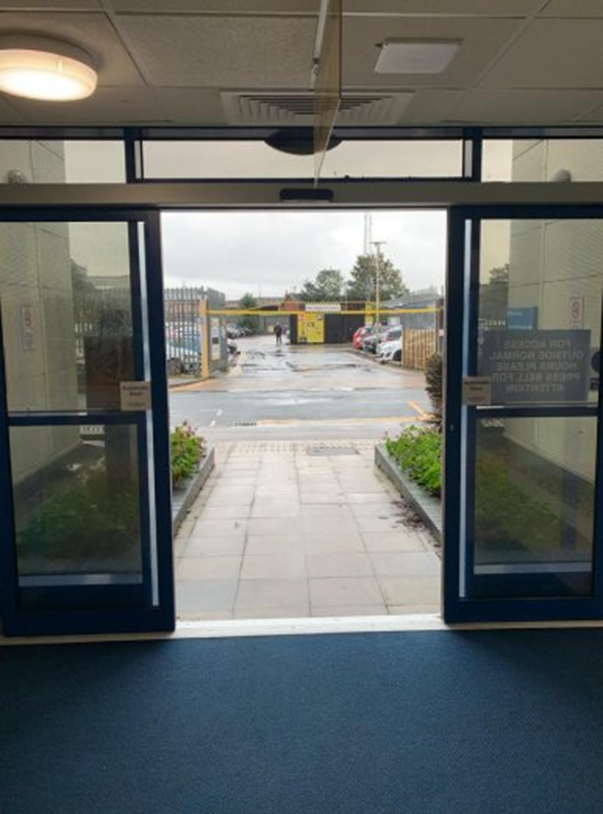
Gem Automatic Doors carry out servicing, repairs and installations across Hull, including for fire-rated and commercial automatic doors, and can help make sure your documentation is in order too. Find out more at gemautomaticdoors.com/.